ACT Intersection Rules Explained
Intersections is one of the four must-pass categories in the ACT knowledge test: a single wrong answer here fails the whole mock exam. Most questions test who gives way to whom, so the priority rules are the key to scoring.
Three types of intersection
- T-junction: one road ends at another; the terminating road gives way to the continuing road.
- Cross roads: two continuing roads meet.
- Roundabout: entering vehicles give way to vehicles already on the roundabout.
Unsigned, unsignalised intersections
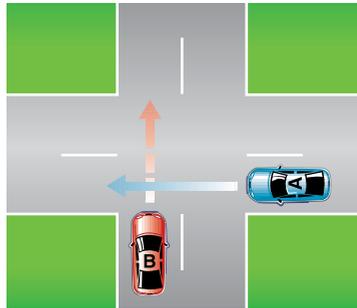
With no lights and no Stop/Give Way sign, when going straight you give way to traffic on your right — the most-tested default rule.
- Going straight: give way to vehicles on your right.
- Turning left: give way to vehicles on your right and pedestrians crossing the road you enter.
- Turning right: give way to vehicles on your right, oncoming traffic going straight or turning left, and pedestrians.
Stop and Give Way signs
A STOP sign means a full stop before proceeding; a GIVE WAY sign means you may roll on but must give way to traffic on both sides and to crossing pedestrians. Both put you on the giving-way side.
Reading diagram questions
- Check for signs/lights first — the car with the Stop/Give Way sign gives way.
- No signs? Identify the intersection type (T-junction vs cross road).
- Check the turn — right turns usually give way to the most traffic.
- If unsure, the handbook rule is: give way to all other vehicles.
FAQ
- How many intersection questions can I get wrong?
- Zero. Intersections is a must-pass category — one wrong answer of the five fails the mock exam regardless of your total score.
- Who goes first at an unsigned intersection?
- Give way to the vehicle on your right by default; if turning right, also give way to oncoming straight/left-turning traffic and pedestrians.
Related guides
Text adapted from the ACT Road Rules Handbook; diagrams © Australian Capital Territory, from the ACT Road Rules Handbook, used for study reference only. Passmate is an independent study tool, not an official or affiliated ACT Government product.