ACT Road Signs Explained
You can answer most ACT sign questions from colour and shape alone. Learn the three sign families and you'll guess unfamiliar signs correctly too.
Regulatory signs — you must obey
- Tell you what you must or must not do; breaking them is an offence.
- Usually red/black/white, circular or rectangular.
- Examples: STOP, GIVE WAY, speed limits, no entry, no U-turn.
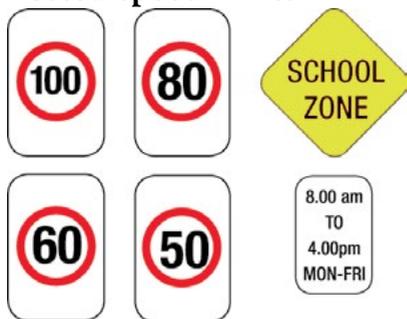
Warning signs — hazard ahead
- Warn of a hazard or change ahead so you slow down early.
- Usually a yellow diamond with a black symbol.
- Examples: bends, slippery road, school zone, animals, road narrows.
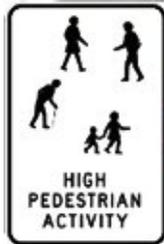
Guide/service signs — information
- Give direction, place names and services.
- Usually green or blue.
- Examples: street names, exit signs, hospital/fuel symbols.
Quick memory aids
- Red = prohibition/mandatory (must obey).
- Yellow diamond = warning (caution ahead).
- Green/blue = information/direction.
- Triangle GIVE WAY, octagon STOP — the shape itself is a cue.
FAQ
- What does a yellow diamond sign mean?
- It's a warning sign — a hazard or change is ahead, so slow down and stay alert.
- How do I quickly spot signs I must obey?
- Check the colour: red usually means regulatory/prohibition (must obey); a yellow diamond is a warning; green/blue is usually information.
Related guides
Text adapted from the ACT Road Rules Handbook; diagrams © Australian Capital Territory, from the ACT Road Rules Handbook, used for study reference only. Passmate is an independent study tool, not an official or affiliated ACT Government product.